Resilient voice, radio, dispatch and emergency communication for critical industrial and public safety operations.
The Becke Telcom Mission-Critical Communications System supports sites where reliable contact between field personnel and control rooms is essential to operational safety. It brings industrial telephones, professional radio networks, emergency call points, dispatch consoles and public warning equipment into a communication environment designed around urgent access, clear operating responsibilities and defined alternatives when a service becomes unavailable.
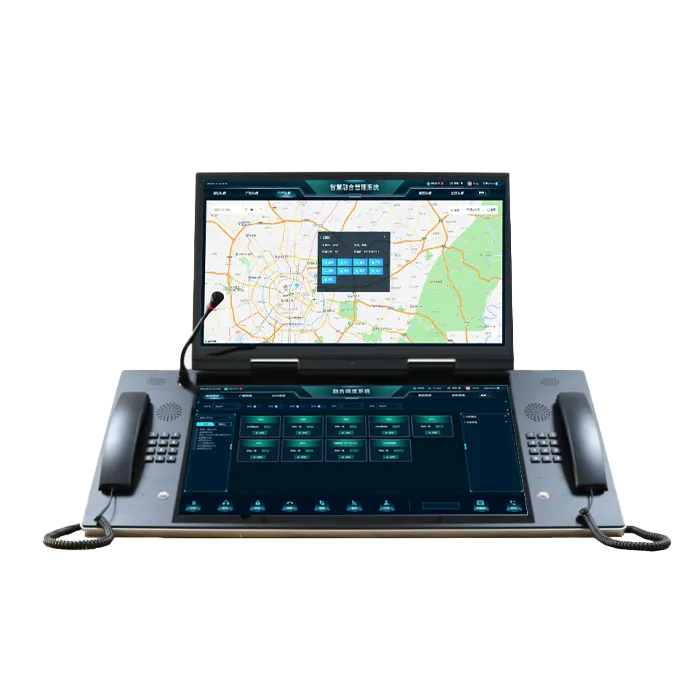
A control-room operator may need to reach a maintenance technician on a SIP telephone, speak with a mobile crew over a radio talk group and issue instructions to a specific production area. These communications use different networks and equipment, but the response procedure must remain coordinated. The system combines appropriate voice and dispatch functions with priority rules, emergency notification and continuity measures suited to the facility's risks, coverage and infrastructure. The objective is to preserve essential communication options during routine operations, network congestion and equipment faults, without assuming that every service requires the same level of protection.
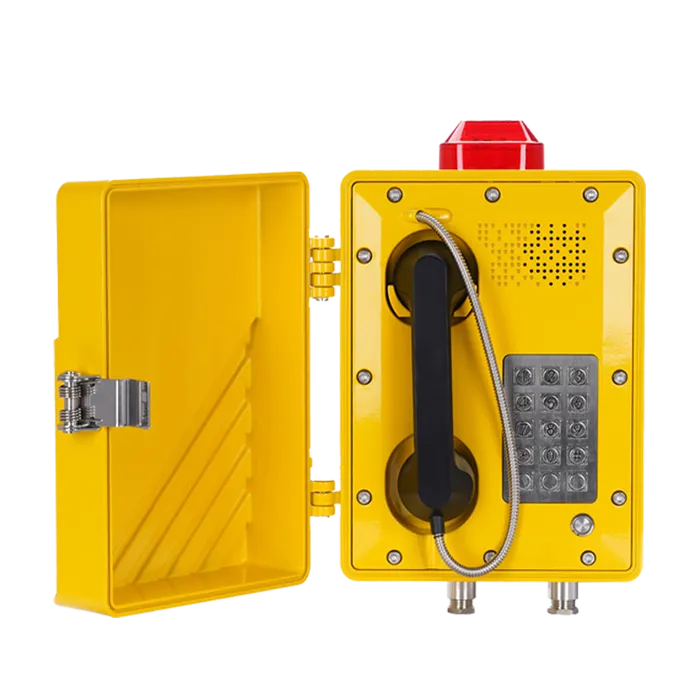
Industrial SIP telephones and emergency call points provide fixed contact locations in workshops, tunnels, machinery areas and remote installations. Handheld and vehicle-mounted radios serve personnel who move between operating zones, while dispatch consoles, operator telephones and paging microphones support control-room communication. Endpoints connect through Ethernet, fiber, radio infrastructure or other site networks according to coverage and installation conditions. Equipment installed in hazardous areas is selected against the applicable environmental and explosion-protection requirements.
SIP servers and IP PBX services control calls to compatible IP endpoints. Professional radio systems retain their own network functions and connect to selected dispatch resources through suitable RoIP gateways or system interfaces. The command and dispatch platform presents authorized communication controls to operators, while voice and video media follow the paths provided by the corresponding communication infrastructure. Group identities, push-to-talk signaling and supplementary radio information are exchanged only to the extent supported by each connected interface.
The architecture identifies dependencies across access links, switches, communication servers, gateways, radio coverage and power supplies. Essential services can be assigned protected power, alternate network routes, standby servers or independently operating local communication paths where the project requires them. Each arrangement is assessed against a defined fault, such as loss of a wide-area link or failure of a primary server. Backup paths and standby equipment increase the available recovery options, but they do not imply that an active call will always survive a change of network or control service.

Call-handling policies distinguish routine traffic from urgent and emergency communication. Within supported platforms, priority classes and operator permissions determine which calls receive preferred handling and when an authorized intervention may interrupt a lower-priority session. The IP network applies its own traffic management through appropriate bandwidth planning and quality-of-service settings; radio priority follows the capabilities of the radio system. These measures are configured and tested together so the priority assigned in an application has a practical effect on the intended communication path.
Control-room staff contact individual users, defined radio groups or multiple response teams through the applicable telephone and radio controls. Group calls, conferences and operator-initiated coordination support shift operations and incident escalation without requiring separate calls to every participant. User privileges define who can address a group or issue an urgent instruction. When operational tasks and incident records must be managed alongside communication, the Becke CAD system provides the corresponding incident and resource-management workflow.
Authorized operators can establish communication between designated telephone positions and connected radio channels, enabling fixed-site personnel to reach field crews through their existing equipment. Radio-to-telephone calling, selected channel linking and push-to-talk control follow the functions exposed by the gateway and radio network. The interworking configuration preserves talk-group permissions and avoids treating radio functions such as encryption, emergency signaling and subscriber identification as universally interchangeable with SIP features.
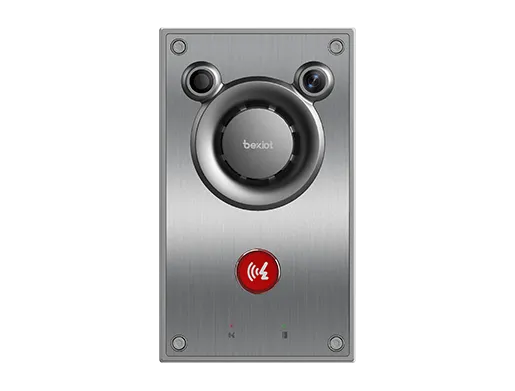
Emergency phones, SOS intercoms and supported alarm interfaces bring urgent reports to designated control-room positions. After receiving a report, operators can establish two-way voice contact, reach the required response group and issue authorized warnings through connected IP paging or public address and general alarm equipment. Paging zones correspond to the areas that need instructions, while escalation procedures determine whether additional departments or locations must be contacted. Call establishment, announcement delivery and personnel acknowledgement are handled as separate operational steps.
During an equipment or network fault, operators use available status indications to identify affected endpoints, servers or links and move to the communication method defined in the site's fallback procedure. A local radio network, fixed emergency point or standby service may remain available even when another path is interrupted, provided that it does not depend on the failed component. Recovery procedures cover alarm review, restoration of primary services, reconnection of interrupted calls and confirmation that essential endpoints are reachable again.

Communication servers, dispatch applications, gateways and managed endpoints provide operating information such as registration status, device alarms and call activity. Maintenance personnel use those records to locate faults and review recurring interruptions. Where supported and authorized, call recording adds a reference for incident investigation and operational review. Access permissions, timestamps and retention settings govern how records are stored and used, without treating a completed communication session as proof that an operational task was completed.
A fault in one service does not have to leave the entire site without a defined contact method. By identifying the communications that are essential to each operating area and providing suitable alternatives, the system gives personnel a clearer way to maintain contact or restore it after an interruption. The benefit is a more predictable response to communication failures, not a blanket promise that all calls remain uninterrupted.
Defined priorities reduce the risk that routine communication will occupy the same attention and system resources needed for urgent instructions. Dispatchers work within agreed escalation rules, while technical priority mechanisms are aligned with the networks that carry those calls. This gives emergency traffic a clearer handling path during busy periods and helps teams act consistently when several demands arrive together.
Compatible radio networks, industrial telephones, SIP services and warning equipment can remain in service as sites expand their communication arrangements. Reusing suitable infrastructure reduces unnecessary replacement and allows new operating areas or communication functions to be added in stages. The integration design also keeps specialized radio and safety functions within the systems responsible for them.
Operator permissions, known endpoint identities and defined contact groups make communication responsibilities easier to maintain across shifts and locations. Supervisors can review available call and equipment records, establish who was contacted and identify communication interruptions that require follow-up. Local teams retain their assigned responsibilities while central control positions coordinate communications across the wider organization.
Public safety and emergency-response organizations coordinate teams that may use different professional radio systems, control-room telephones and temporary field communication resources. Defined group access and cross-network contact routes support communication between command positions and response units. During multi-agency operations, the priority is to maintain clear communication authority and reach the relevant group without exposing every organization's entire network to all participants.
Oil and gas plants, pipeline facilities, offshore installations and power-generation sites need dependable contact between control rooms and personnel working around remote or hazardous equipment. Fixed industrial telephones provide known call points; approved hazardous-area terminals and professional radio systems support mobile crews. Backup communication arrangements and localized warning procedures are selected around operating zones, access restrictions and the consequences of losing a contact path.
Railways, metro systems, tunnels and ports extend communication services across stations, routes and maintenance locations. A control room may need to reach a station operator, a trackside team and passengers at an emergency help point through different channels. Site design therefore emphasizes corridor coverage, reliable contact at fixed safety points and local communication options when a remote link or central connection is interrupted.
Manufacturing and processing facilities must deliver understandable instructions across noisy workshops, outdoor equipment areas and separate buildings. Industrial telephones, selected radio groups and zoned public address equipment serve different acoustic and working conditions. Emergency procedures connect the personnel who report a fault with the supervisors and response teams responsible for action, while speaker intelligibility and terminal accessibility are checked at the point of use.

Electricity distribution networks, water facilities and utility corridors combine staffed control rooms with remote or unattended locations. Fixed help points and local telephones provide identifiable contact points, while field radio and mobile communication serve inspection and repair teams. Independent local coverage and clearly documented fallback procedures help maintenance personnel coordinate service restoration when the normal wide-area communication link is unavailable.
Becke Telcom develops mission-critical communication solutions around the site's users, operating areas, communications infrastructure and required continuity levels. System planning covers endpoint selection, SIP and radio interfaces, emergency priorities, network and power dependencies, fallback procedures and acceptance tests. Contact Becke Telcom to discuss communication requirements for your facility or command center.